Bridging cultures, strengthening Europe: EUniWell Rectors’ Assembly in Paris
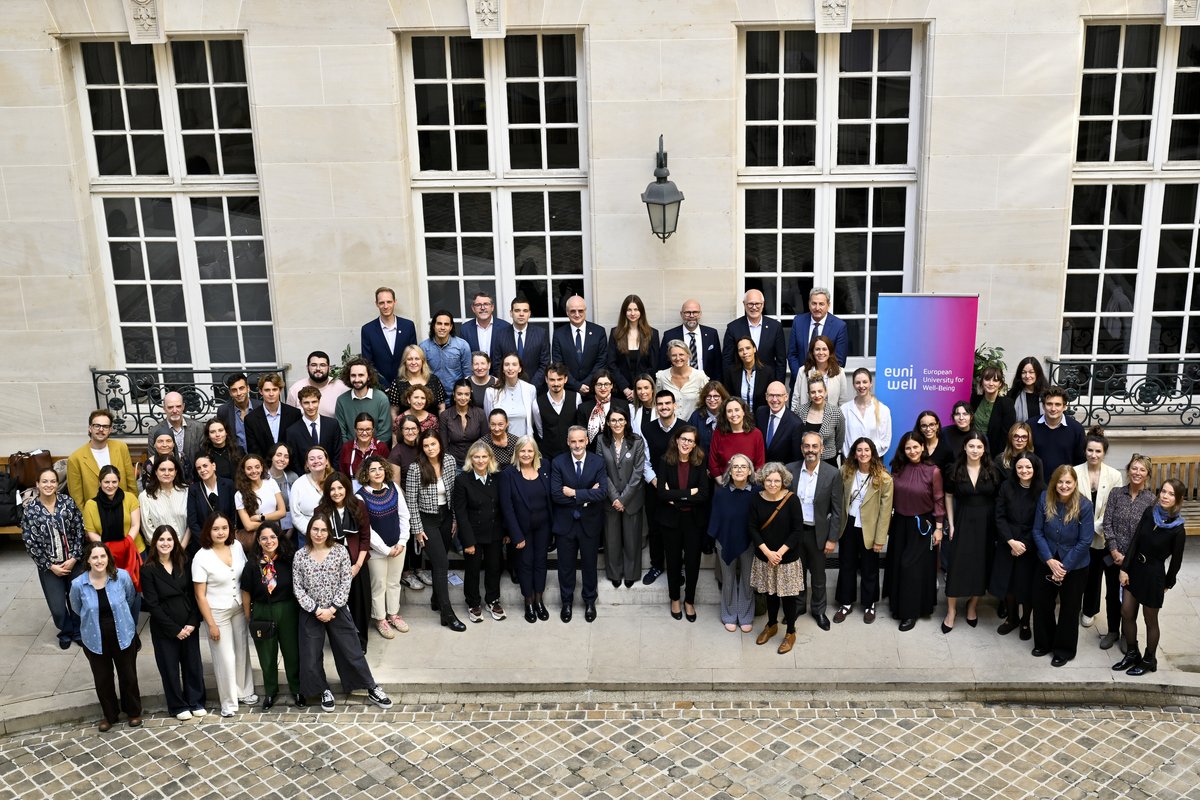
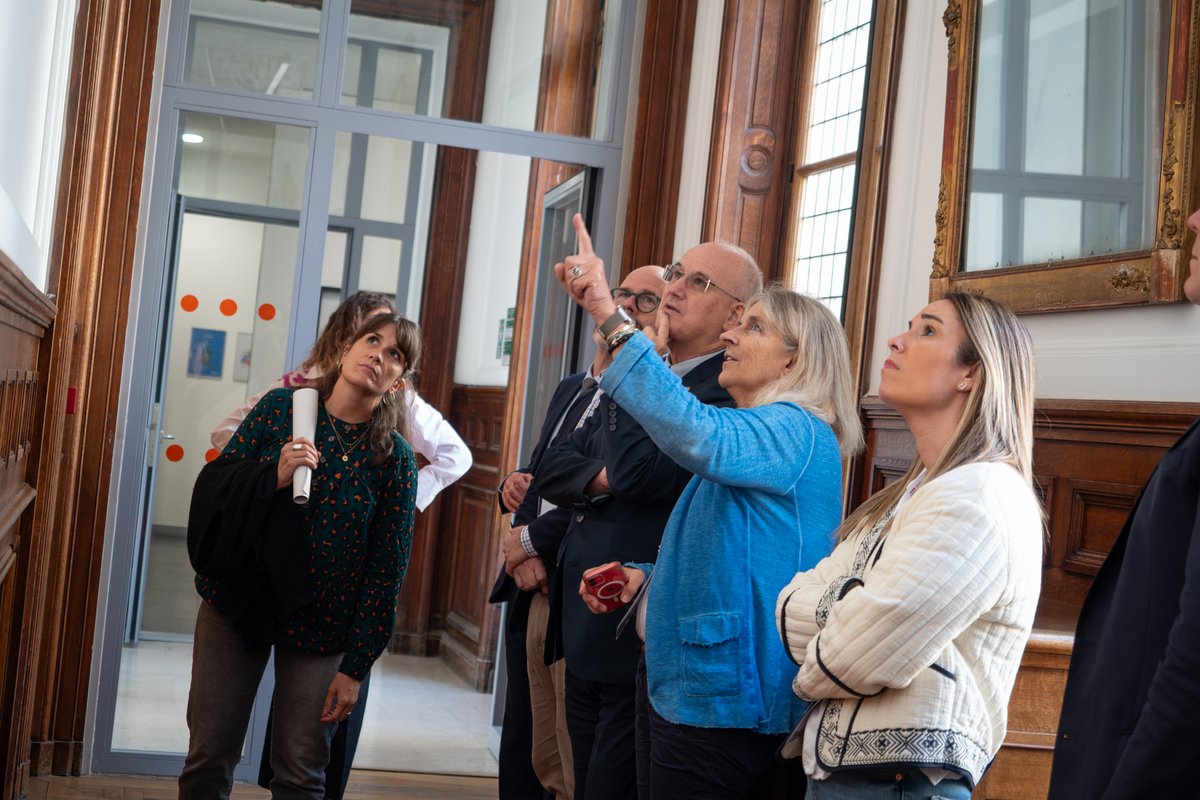
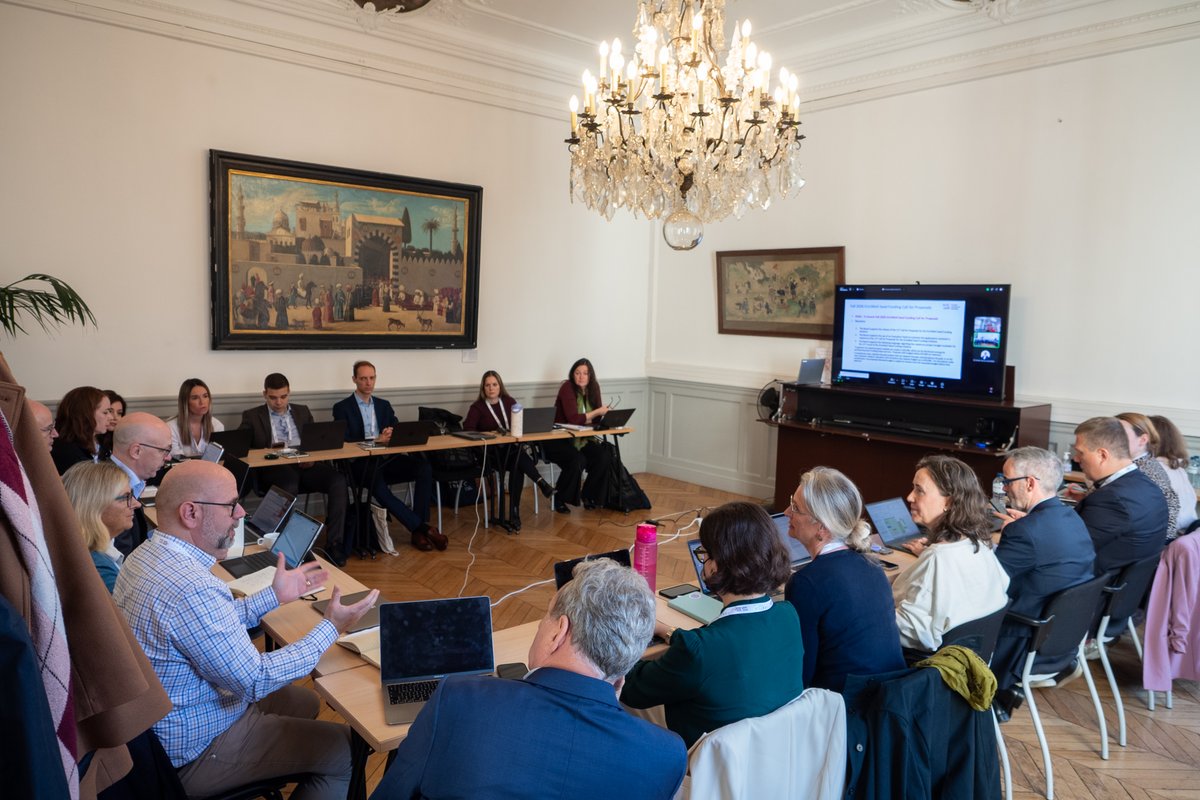
From 12 to 14 October 2026, university leaders, student representatives and staff from across EUniWell’s member institutions gathered at Inalco’s historic Maison de la Recherche in Paris. As EUniWell’s highest decision-making body, the Rectors’ Assembly reviewed the Alliance’s progress and set priorities for its continued development, discussed the current policy landscape and the discussions around the next Multiannual Financial Framework. The Rectors’ Assembly also worked on its strategy for shared research infrastructures, global cooperation, and preparing joint proposals.
Advancing EUniWell 2030
The Rectors’ Assembly was preceded by meetings of the EUniWell Board and Institutional Coordinators on Monday 12 October, including a joint session to align strategic and operational perspectives. A reception and cruise dinner on the Seine provided views of Paris and the sparkling Eiffel Tower as well as an opportunity to continue their exchanges in a more informal setting.
Professor Beatrix Busse, EUniWell Chief Development Officer, opened the Closed Session of the Rectors’ Assembly on 13 October, which focused on the next phase of the Alliance in the context of evolving European policy priorities and funding opportunities. EUniWell university leaders discussed sustainable structures, the continued development of the EUniWell platform model, shared research infrastructures, and global cooperation.
Discussions also addressed the strategic integration of artificial intelligence across the Alliance and its implications for EUniWell’s future direction, as well as the European Degree Label and its relevance to the development and recognition of joint educational opportunities. These discussions were framed by the three strategic ambitions of EUniWell 2030: becoming a Voice for Well-Being, becoming a European University, and becoming Communities for Well-Being.
Professor Beatrix Busse, Chief Development Officer of EUniWell, emphasised: “With negotiations on the next Multiannual Financial Framework under way, we must advocate strongly for European Universities alliances to be able to fully and sustainably profit from Erasmus+, Horizon Europe and other European Commission programmes. EUniWell has already demonstrated its added value: our strength lies in the deep, long-term cooperation we enable across education, research and innovation, including through shared infrastructures. We now need to secure the conditions that will allow this cooperation to deepen further and contribute fully to Europe’s resilience and competitiveness – with well-being at the heart of our work.”
Connecting research across Europe
Shared research infrastructures formed an important part of the closed-session discussions. By connecting expertise, resources, and research communities across its member universities, EUniWell aims to create stronger foundations for interdisciplinary cooperation and research that addresses individual, societal, and environmental well-being.
Illustrating how EUniWell’s platform model translates into tangible successes and opportunities, the SPARK programme, coordinated by the University of Cologne for the Alliance, secured European Commission funding in 2026. Supported by €3.1 million under the Marie Skłodowska-Curie Actions (MSCA) COFUND scheme, the five-year programme will support 26 postdoctoral researchers through interdisciplinary well-being research, international mobility, and intersectoral collaboration. SPARK demonstrates how cooperation across EUniWell institutions can attract competitive European funding while creating opportunities for early-career researchers. It also illustrates how the Alliance can connect research excellence, talent development, and collaboration beyond academia in support of its long-term ambitions.
Multilingualism in a multipolar world
The Open Session, entitled “Multilingualism in a Multipolar World”, explored how linguistic and cultural plurality can strengthen research, education, inclusion, and well-being in Europe and beyond.
Opening the session on behalf of Professor Beatrix Busse, Giorgia Giovannetti, Deputy Chief Development Officer of EUniWell, reflected on EUniWell’s progress since its pilot phase and highlighted the collective commitment needed to build on these achievements: “EUniWell has reached many of its tasks. But still, we have more to reach. […] We need to cooperate more, especially if we really want to become the European University of Well-Being, as well as the voice for well-being, as we say in our Strategy 2030. We have to put our forces together.” Her remarks set the tone for contributions addressing multilingual research at Inalco, the Mediterranean as a lens through which to understand well-being and Europe’s place in the world, and the first findings of collaborative research into lived multilingualism across EUniWell.
In the first keynote, Professor Rima Sleiman, Vice-President for Research at Inalco, highlighted the potential of European Universities alliances to shape research questions jointly and sustain interdisciplinary cooperation beyond individual project cycles. Her contribution explored how linguistic knowledge, regional expertise, and multilingual sources can expand the evidence base for research on democracy, migration, heritage, conflict, artificial intelligence, and access to rights and care.
Dr Andreas Guidi, Associate Professor at Inalco and EUniWell Champion 2025–2026, approached Europe from a Mediterranean perspective in the second keynote, highlighting how history, area studies, and the humanities and social sciences can contribute to understanding crises, identities, and belonging in a changing global order.
Professor Julie A. Panagiotopoulou of the University of Cologne and Professor Theodoros Marinis of the University of Konstanz presented initial findings from LIME (Lived Multilingualism within EUniWell), a collaborative research project examining language use and needs among students and staff across the Alliance. The findings will help inform the development of a shared EUniWell language policy aimed at supporting multilingual participation and inclusion.
The session concluded with the Rectors’ round table “Bridging Cultures, Building Well-Being”, chaired by EUniWell Chief Student Officer Gaida Lefeuvre Mendoza and featuring Professor Delphine Allès, Acting Rector of Inalco, Professor Rafał Krenke, Rector of the Medical University of Warsaw and Professor Rosa M. Crujeiras Casais, Rector of the University of Santiago de Compostela. The discussion explored how students’ perspectives can become an even more integral part of the Alliance’s development. Gaida Lefeuvre Mendoza highlighted the talent, commitment and ideas students already contribute, while pointing to the potential of more coherent support: “Imagine, just imagine what we could do if we also had the structure to support the students ambition.” The exchange underlined EUniWell’s commitment to strengthening dialogue between students and university leadership.
Student protests prompt reflection on education and well-being
The Rectors’ Assembly took place as secondary school pupils and university students were mobilising in Paris, requiring the planned sessions at the Sorbonne to be relocated to Inalco’s Maison de la Recherche. Rather than treating the situation solely as a logistical challenge, participants recognised it as a call to reflect on the wider societal challenges facing younger generations. In her opening remarks, Professor Delphine Allès, Acting President of Inalco, linked the concerns voiced in Paris with EUniWell’s commitment to well-being for individuals and society: “These protests invite us to acknowledge that young people’s well-being is a crucial component of a society’s well-being, and that it depends on structural conditions: conditions of study and daily life, future prospects, and the capacity to exercise genuine agency in collective decisions, particularly those that span generations and shape the future.” She also highlighted the role of European Universities alliances in ensuring that young peoples’s concern inform wider social debate: “Even where these concerns fall outside our direct range of mission, EUniWell, as a European University alliance, can play a role in amplifying them.”
From Paris towards Europe
The Paris Assembly reaffirmed EUniWell’s direction: further deepening established cooperation to realise the ambitions of the EUniWell 2030 strategic framework and deliver lasting benefits for its university communities and society. As Europe defines its future funding priorities, the Alliance will advocate for the conditions needed to sustain this work, positioning research, education and well-being as mutually reinforcing foundations for Europe’s resilience.
Further information
Attending Rectors and EUniWell Board Members
- Prof. Dr. Beatrix Busse, EUniWell Chief Development Officer – University of Cologne (Germany)
- Gaida Lefeuvre Mendoza, EUniWell Chief Student Officer – Nantes Université (France)
- Prof. J. Samuel Baixauli Soler, Rector – University of Murcia (Spain)
- Prof. Dr. Rafał Krenke, Rector – Medical University of Warsaw (Poland)
- Dr. Graham Harrison, EUniWell Managing Director – University of Cologne (Germany)
- Mark Havasi, Student Executive Board Member – Semmelweis University (Hungary)
- Zofia Tarc, Student Executive Board Member – Medical University of Warsaw (Poland)
- Prof. Dr. Giorgia Giovannetti, Deputy EUniWell Chief Development Officer & Vice-Rector for International Relations – University of Florence (Italy)
- Prof. Dr. Delphine Allés, Acting Rector – Inalco (France)
- Prof. Dr. Il-Il Yatziv Malibert, Deputy Vice-President for European Affairs – Inalco (France)
- Prof. Dr. Isabell Otto, Vice-Rector for Diversity and Academic Staff Development – University of Konstanz (Germany)
- Prof. Dr. Daniel Alvunger, Deputy Vice-Chancellor for Internationalisation – Linnaeus University (Sweden)
- Prof. Florentina M. Mena Martinez Vice-Rector for Internationalisation – University of Murcia (Spain)
- Prof. Dr. Céline Bressollette-Bodin, Vice Rector – Nantes Université (France)
- Dr. Inmaculada Otero Moral, Delegate of the Rector for Internationalisation – Universidade of Santiago de Compostela (Spain)
- Prof. Dr. Miklós Kellermayer, Dean of the Faculty of Medicine – Semmelweis University (Hungary)
- Dr. Tamás Hegedüs, Director for International Relations and Alumni Affairs – Semmelweis University (Hungary)
- Prof. Vadym Popko, Vice-Rector for International Cooperation – Taras Shevchenko National University of Kyiv
- Prof. Dr. Michał Grąt, Vice-Rector for Internationalization, Promotion, and Rural Development – Medical University of Warsaw (Poland)