From legal research to European policy: a student perspective on the EUniWell Legal Clinic on Gender Equality
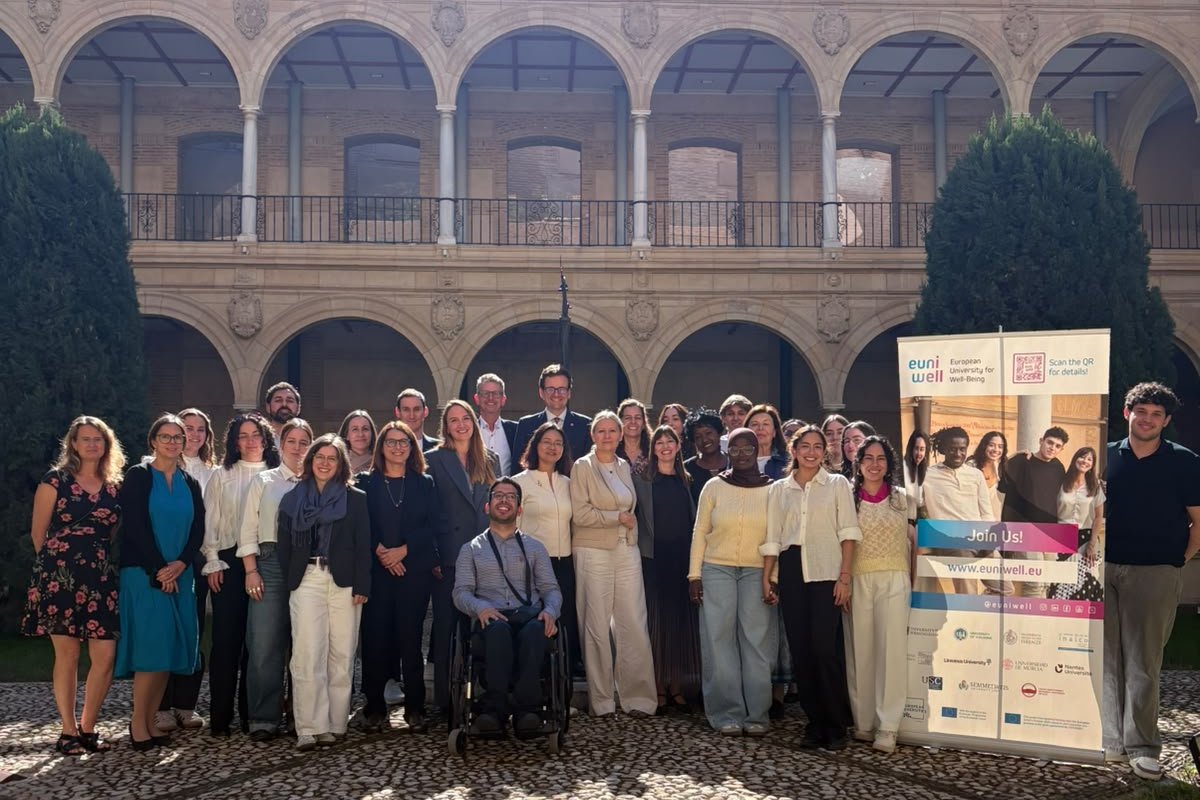
Gender equality is not only a question of legal principles. It is also about ensuring that these principles translate into meaningful opportunities, protection and participation in everyday life. With this in mind, as law students from across Europe we joined the EUniWell Legal Clinic on Gender Equality to explore how legal research and student engagement could contribute to addressing some of the challenges that remain in European policy.
Running from October 2025 to October 2026, the Legal Clinic approached gender equality from both a European and an international perspective. Divided into two working groups, we respectively focused on the United Nations framework and on the European Union framework. Each group pursued its own research and policy-related tasks, allowing us to examine gender equality through different institutional and legal perspectives.
Although the tasks differed, both groups pursued the same aim of advancing gender equality and exchanged perspectives along the way.
From research to concrete policy contributions
Our work addressed three interconnected areas: gender equality in the development and use of artificial intelligence, the situation of students with caring responsibilities, and the protection of minors in digital spaces.
We developed two legal research papers and prepared a formal comment on the European Parliament's draft concerning artificial intelligence and gender equality. Our research examined how technological developments can reinforce existing inequalities, particularly through algorithmic gender bias, and why digital policies must account for the experiences of different groups.
We also addressed the challenges faced by young people with caring responsibilities, highlighting the importance of flexible learning arrangements, hybrid education and adequate support structures in higher education. In doing so, we emphasised that equal access to education requires more than formally equal opportunities: institutions must also recognise and respond to different individual circumstances.
Another important area of our work was the protection of minors in digital environments. We explored the importance of digital literacy, protection against cyberbullying and image-based abuse, and greater accountability in the development and use of digital technologies.
Our contributions did not remain within the university environment. In March 2026, we submitted our comments on the European Parliament's draft. During a subsequent exchange in May with members of the European Parliament, we received feedback that our contributions had influenced the ongoing negotiations. In particular, considerations relating to identity-based factors were reflected in amendments discussed within the Parliament's Committee on Culture and Education.
This was an especially meaningful moment: we were not simply learning about European policymaking, our work as students was contributing to it.
Our work also connected with broader international conversations on gender equality. While our group focused on the European perspective, the UN-focused group explored the issue within an international framework. In October 2026, we had the opportunity to discuss our work with the UN Working Group on discrimination against women and girls. This exchange allowed us to consider how issues such as artificial intelligence, gender equality, and the protection of vulnerable groups extend beyond European policy frameworks. Bringing both perspectives together highlighted the importance of cooperation between European and international institutions in advancing gender equality.
A European learning experience beyond the classroom
While our policy contributions were an important outcome, the Legal Clinic offered us much more than an opportunity to conduct legal research.
Working alongside students from different European universities allowed us to challenge assumptions and approach common legal questions from different national and cultural backgrounds. Gender equality is a shared European concern, but the experiences and challenges associated with it are not always the same. Bringing these perspectives together enriched our research and encouraged a more nuanced understanding of the issues.
What began as an academic collaboration developed into genuine friendships and a sense of belonging to a wider European community, showing how cooperation within an alliance can create connections that outlast a single project.
What our experience tells us about the future of European higher education
Looking back, the EUniWell Legal Clinic on Gender Equality demonstrated the value of connecting universities, students, and European institutions. It reflected the importance of collaboration across borders and disciplines, while showing how universities can contribute to societal challenges beyond their traditional academic role.
At its core, the initiative embodied the idea that education should not only prepare us to understand the world around us but also equip us to shape it actively.
Ultimately, our experience showed us that we do not have to wait until graduation to make a difference. Given the right opportunities, we can already be part of the conversations, research and decisions shaping a more equal and inclusive Europe.
Further Information
- Working Group on discrimination against women and girls: https://www.ohchr.org/en/special-procedures/wg-women-and-girls
- “Artificial Intelligence in Classrooms: Pedagogical Dimensions”, Policy Department for Citizens, Equality and Culture. Author: Dr. Vasiliki Charisi Directorate-General for Citizens’ Rights, Justice and Institutional Affairs: https://www.europarl.europa.eu/RegData/etudes/BRIE/2026/784574/IUST_BRI(2026)784574_EN.pdf
- European Parliament legislative resolution of 13 March 2024 on the proposal for a regulation of the European Parliament and of the Council on laying down harmonised rules on Artificial Intelligence (Artificial Intelligence Act) and amending certain Union Legislative Acts: https://artificialintelligenceact.eu/wp-content/uploads/2024/04/TA-9-2024-0138_EN.pdf
Stay in touch & up-to-date!
Follow us on our social media channels:
Bluesky
LinkedIn
Instagram
Facebook
And subscribe to our EUniWell newsletter for regular highlights and save-the-dates to upcoming EUniWell events delivered straight to your inbox: