From local initiatives to European learning: exploring the future of social entrepreneurship
Social entrepreneurship seeks to address social needs and create value for communities and individuals. Across Europe, its opportunities and challenges are shaped by local conditions, national regulations, and different welfare systems.
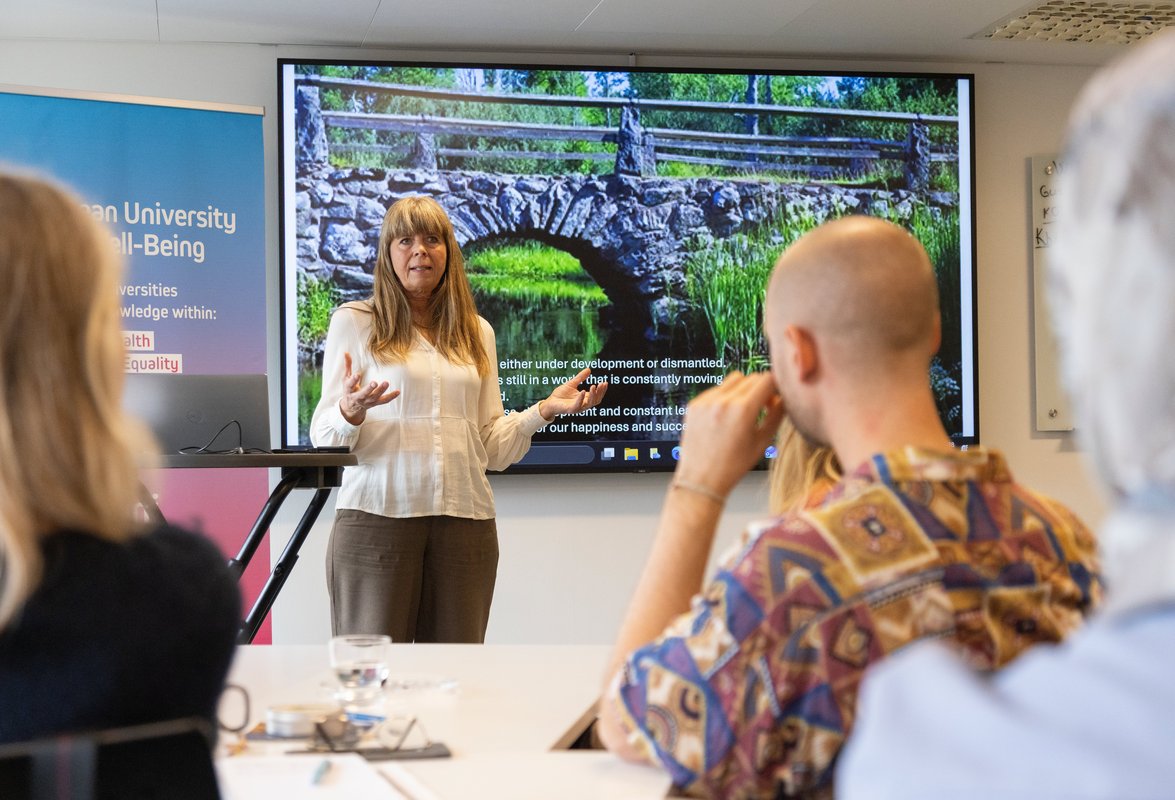
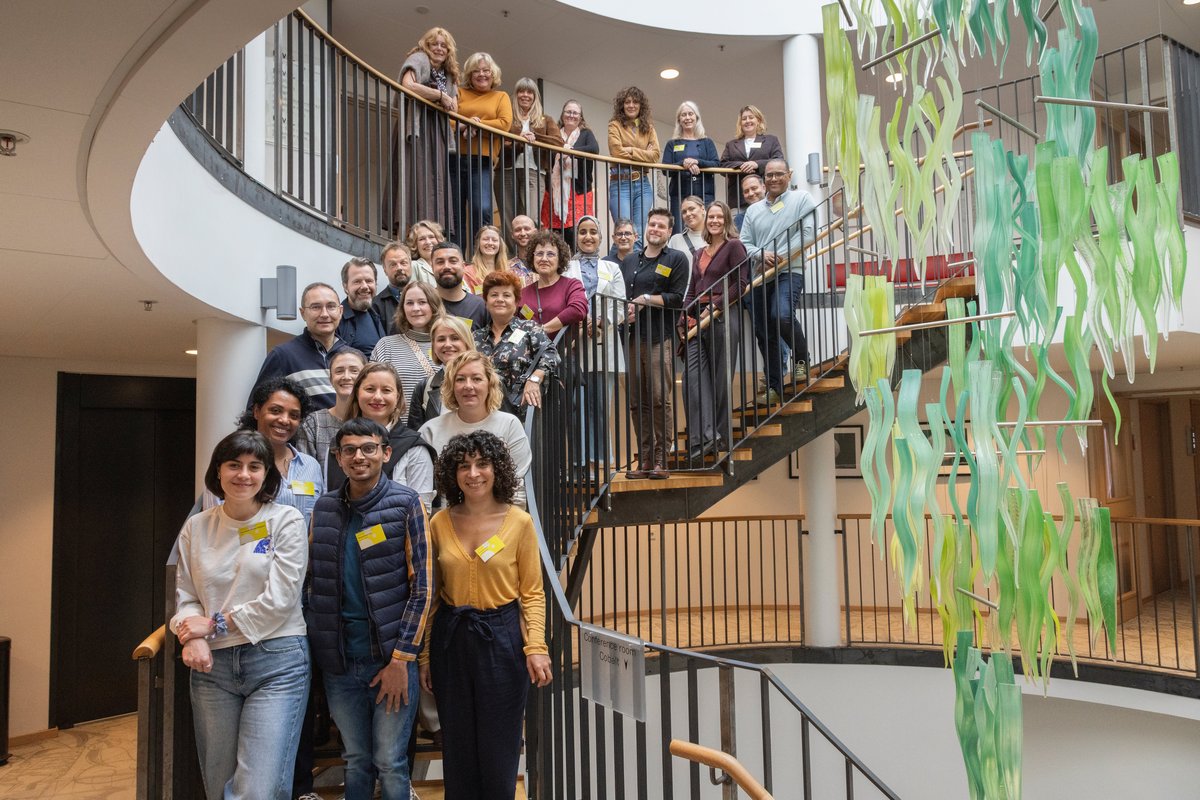
These differences were at the centre of The Future of Social Entrepreneurship Across Contexts, a two-day Co-Creation Lab hosted by Linnaeus University on 30 September and 1 October as part of its engagement in EUniWell.
Held at Kosta Boda Art Hotel, the event brought together participants from universities, municipalities, civil society organisations, and social economy initiatives in several European countries, including partners within EUniWell. The programme combined research with practical experience through presentations, workshops, group discussions, and a panel discussion.
The event was developed through collaboration within EUniWell, connecting the Alliance’s work on social equality with its work on civic engagement and knowledge transfer, with social entrepreneurship as the shared focus.
Local experience at the heart of European exchange
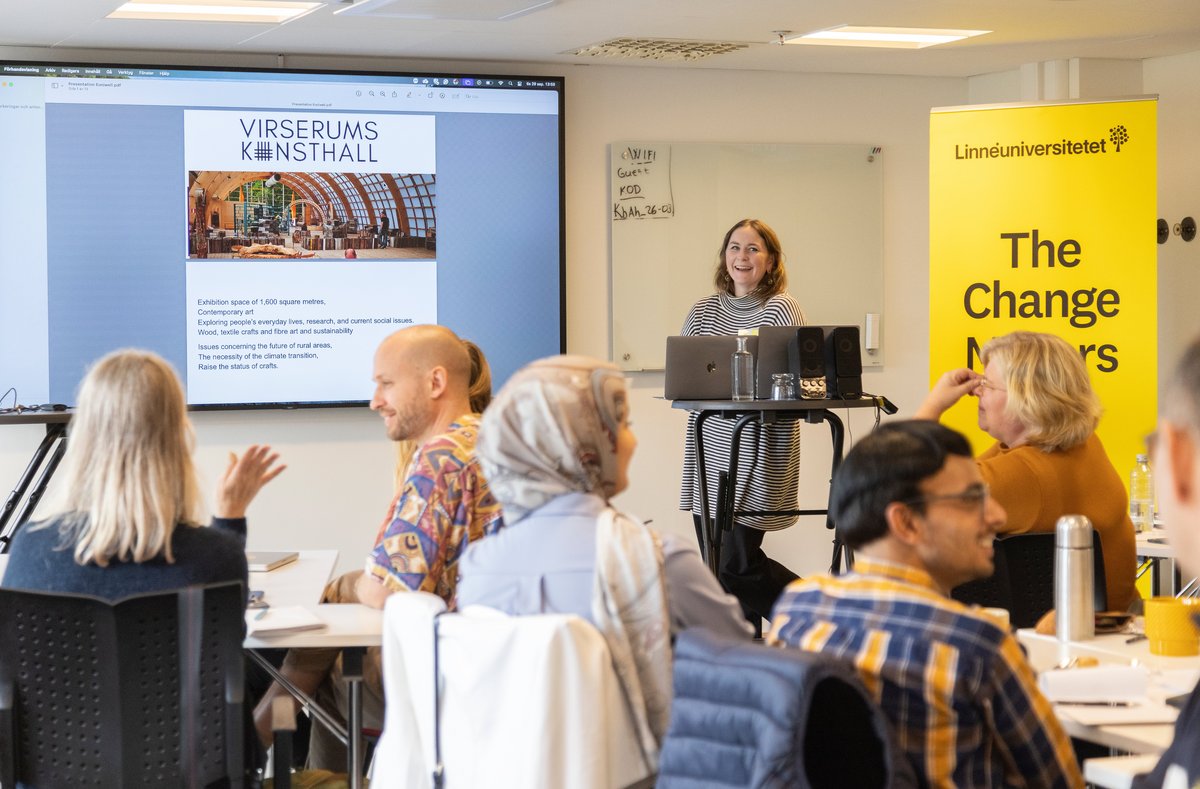
Experiences from local social economy initiatives provided a practical starting point for the discussions. Mette Adolfsson from Mötesplats Häradsbäck, Julia Wiel from Virserums Konsthall, and Dicte Frost and Samson Flohr from Earthbound Ecovillage in Skruv presented their work and discussed some of the challenges they had encountered.
Their presentations demonstrated how local initiatives can respond to societal and environmental challenges. They also highlighted the practical difficulties involved in developing and sustaining such initiatives, including securing funding, building long-term partnerships, and navigating the expectations of different stakeholders.
By examining these experiences together, participants were able to explore how knowledge developed locally may contribute to wider European learning. The discussions also showed why solutions cannot necessarily be transferred directly from one country or community to another.
Context matters
One of the main conclusions from the Co-Creation Lab was that social entrepreneurship can take many different organisational forms. Its development is strongly influenced by local conditions, national regulations, and welfare systems.
This makes collaboration between the universities within EUniWell particularly valuable. As the universities are located in countries shaped by different welfare models, the Alliance creates opportunities to compare how social entrepreneurship is supported and regulated in different contexts.
The exchange gave participants a deeper understanding of the complexity of social entrepreneurship and the forms it can take. They shared different ways of managing its challenges and discussed both the advantages and disadvantages of the approaches used in different countries.
“Social entrepreneurship can take many different forms, and its opportunities and challenges depend largely on the context in which it develops. More knowledge is needed about these differences, as well as about how social entrepreneurs manage the tension between creating social value and securing the funding needed to sustain their work,” says Malin Tillmar, Professor of Entrepreneurship at Linnaeus University, who developed and was responsible for the academic content of the programme in collaboration with Senior Lecturer Mathias Karlsson.
Creating social value while securing long-term funding
The balance between social aims and financial sustainability emerged as a central challenge. Social entrepreneurs seek to create social value, but they also need to finance their work and build organisations that can remain sustainable over time.
The discussions indicated that social entrepreneurship is becoming increasingly important in several European countries as political priorities change. At the same time, those working in the field must often manage financial, structural, and ethical challenges.
Bringing together academic knowledge and practical experience enabled participants to examine these challenges from different perspectives and to learn from experiences across sectors and national contexts.
Collaboration can strengthen knowledge and legitimacy
The Co-Creation Lab highlighted the importance of stronger networks involving social entrepreneurs, universities, municipalities, civil society, and other support organisations. Universities were identified as important partners in research and knowledge development, as well as sources of relevant expertise.
For municipalities and regions, collaboration of this kind can provide access to research, international networks, and practical examples of how local and regional challenges can be addressed through innovation and cooperation.
“When perspectives from academia, municipalities, entrepreneurs, and different countries come together, our collective knowledge grows. By working together, we can help strengthen the legitimacy of social entrepreneurship as an important force for sustainable societal development,” says Helena Belfrage, Senior Advisor for Collaboration at the Office of External Relations, Linnaeus University, who coordinated the overall programme.
Taking the work forward within EUniWell
The Co-Creation Lab was not only an opportunity to compare experiences. It also opened a discussion about how participants could continue to collaborate and learn together.
As a next step, participants have been invited to suggest ways of continuing the work. Their contributions will be compiled and taken forward by EUniWell representatives as they explore opportunities to develop the Alliance’s work on social entrepreneurship during its next phase.
EUniWell intends to apply for further EU funding for the period beginning in autumn 2027.
Further information
All the organisations were contributing in the programme under the theme of “Experiences and dreams of social entrepreneurs.” Testimonials from entrepreneurs from three regional entrepreneurship projects took part:
- Mette Adolfsson, Mötesplats Häradsbäck, a community-driven meeting place providing local services and activities in Häradsbäck, Småland, Sweden.
- Julia Wiel Fredén, Virserum Art Gallery, an independent art gallery focusing on rural communities and sustainability in Virserum, Småland, Sweden.
- Dicte Frost and Samson Flohr, Earthbound Ecovillage, an emerging regenerative community focused on sustainable living in Skruv, Småland, Sweden.
Contact
Helena Belfrage, Senior Advisor for Collaboration, Office of External Relations, Linnaeus University, helena.belfrage[at]lnu.se
Stay in touch & up-to-date!
Follow us on our social media channels:
Bluesky
LinkedIn
Instagram
Facebook
And subscribe to our EUniWell newsletter for regular highlights and save-the-dates to upcoming EUniWell events delivered straight to your inbox: