Commit to change: researching student engagement with Enactus
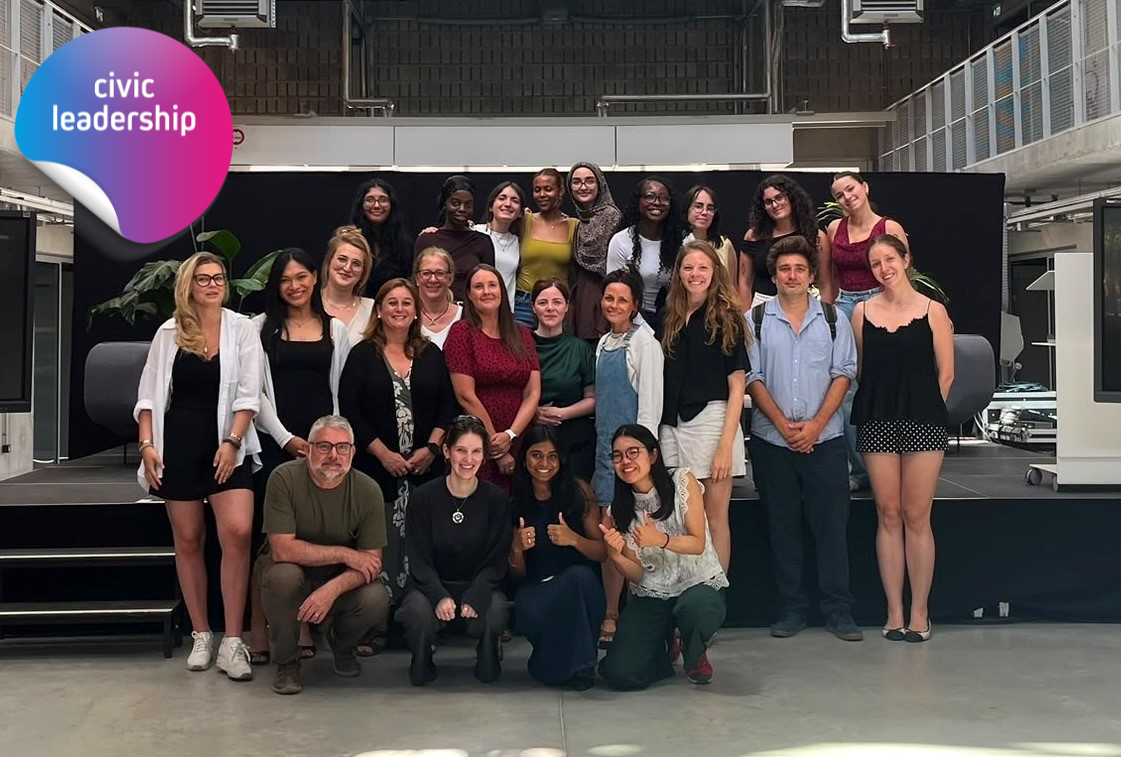
At the beginning of summer, an international, interdisciplinary team of students from EUniWell partner institutions came together to carry out a research project in collaboration with Enactus UK & Ireland.In a series of online sessions, they developed an understanding of the factors that support or hinder long-term student engagement by drawing on existing research and conducting their own study. The project concluded with an in-person meeting in Nantes, where students finalised their findings and took part in entrepreneurial learning experiences, including a social entrepreneurship escape game and a workshop at SOLILAB on social innovation and the challenges of scaling initiatives by Prof. Mathias Guerineau.
Partnering with Enactus
Enactus is an organisation that supports young people in using entrepreneurial action to create positive social change. For more than two decades, Enactus has been working with students across the UK and Ireland to build the skills, confidence and agency they need for personal and professional development. Their core values – passion, innovation, and integrity – guide everything they do.
However, like many in the sector, they face the broader shifts altering how students engage with extra-curricular opportunities. Since 2002, competing priorities have increasingly squeezed students’ free time, pushing us to continually pivot and innovate so we remain directly relevant to their needs.
“The data is clear: when students throw themselves into Enactus, they unlock immense personal and professional value. The enthusiasm to take part is always there; our challenge lies in creating flexible, practical pathways that fit seamlessly into their real lives. To be completely open, as a lean team, we usually adapt our programmes based on what we observe and experience day-to-day. Deep, formal research often feels like a luxury when balanced against limited time, capacity, and resource. So, when the opportunity arose to partner with EUniWell on their Service-Learning Project, we jumped at the chance!” states Amy Brereton, CEO of Enactus UK & Ireland.
Against this backdrop, Enactus commissioned the international student team to examine the mechanisms of voluntary engagement more closely. Using the COM-B framework, they explored the vital question: 'Why Students Stop Showing Up', mapping out our key engagement and retention dynamics.
Learning to create research that matters
The project transformed the students’ role: they moved from learners to researchers. Over several weeks of online collaboration, they reviewed existing literature, explored behavioural theories, developed and refined a survey instrument, analysed quantitative and qualitative data, and reflected on their findings in dialogue with Enactus representatives.
“What made this project particularly valuable was not only the research itself, but the way it was conducted” says Dr Jana Arbeiter.
Enactus was actively involved from the outset. Practitioner feedback helped sharpen the research questions and survey design. Emerging findings were continuously discussed in relation to the practical realities of student volunteering. Rather than formulating recommendations in isolation, students experienced how robust solutions emerge through dialogue, shared reflection and mutual learning.
This reflects an important principle of contemporary research: societal impact is most likely when research and practice work together rather than in parallel. Service-learning projects such as this create opportunities to bridge this gap by recognising academic and practical knowledge as equally valuable.
For many participants, it was also their first experience of conducting research with an external partner. Alongside methodological skills – such as survey design, mixed-methods analysis and scientific communication – they developed competences that are difficult to teach in traditional classroom settings: intercultural and interdisciplinary collaboration, navigating uncertainty, responding to stakeholder feedback, and translating research into actionable recommendations.
Insights and next steps
The students articulated both challenges and opportunities with precision. Their analysis yielded a central insight: students are strongly motivated by values and purpose. However, their involvement is constrained primarily by practical and structural barriers rather than a lack of motivation.
By pinpointing precise friction points around schedule constraints and peer connection, they delivered clear, actionable recommendations that bridge the gap between academic research and real-world practice. “In short, they gave us some great ideas to help us keep delivering some fantastic impact across the UK & Ireland!” – Amy Brereton, CEO Enactus UK and Ireland.
Moving forward, Enactus is now weaving these insights straight into future programmes. By breaking down these practical barriers, they can build a more adaptable, supportive environment that builds the skills, confidence, and agency of young people to help them shape their own futures.
Learning through co-creation of knowledge
The project demonstrates that service-learning is more than applying academic knowledge in practice. It enables students, researchers and practice partners to generate new knowledge together. Through the combination of academic expertise and practical experience, the project produced not only robust findings on student engagement, but also a model for how collaborative research can advance learning, innovation and social change.
The most important lesson for the students: impactful research begins with listening. Before proposing solutions, it is essential to understand the needs, values and lived realities of the target group. This mindset of curiosity, collaboration and humility is something the participants will carry forward into dissertations, research projects and their future professional careers.
Further information
To read more about this year’s project schedule you can review the full study guide here: Study Guide EUniWell International Service Learning Project 2026 UKON_NU Nov 2025.pdf
To learn more about the service-learning concept and ways to get involved, here are our details: Service Learning
Contact
Please contact the Service-Learning team to discuss opportunities for collaboration: Service Learning
Stay in touch & up-to-date!
Follow us on our social media channels:
Bluesky
LinkedIn
Instagram
Facebook
And subscribe to our EUniWell newsletter for regular highlights and save-the-dates to upcoming EUniWell events delivered straight to your inbox: